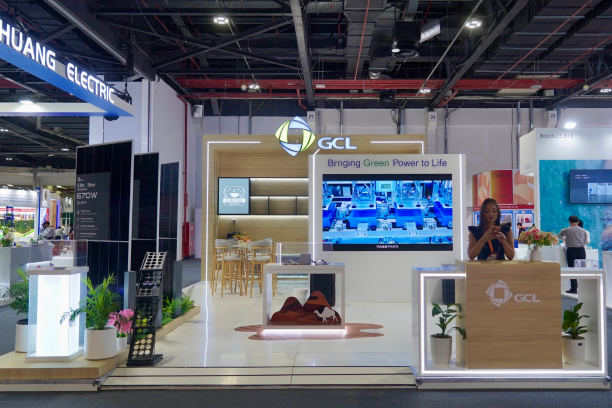



GCL, a global provider of solar module solutions, showcased its latest high-efficiency module technologies at PV Expo 2026 in Tokyo, reinforcing its commitment to the Japanese market and other high-standard international solar markets.
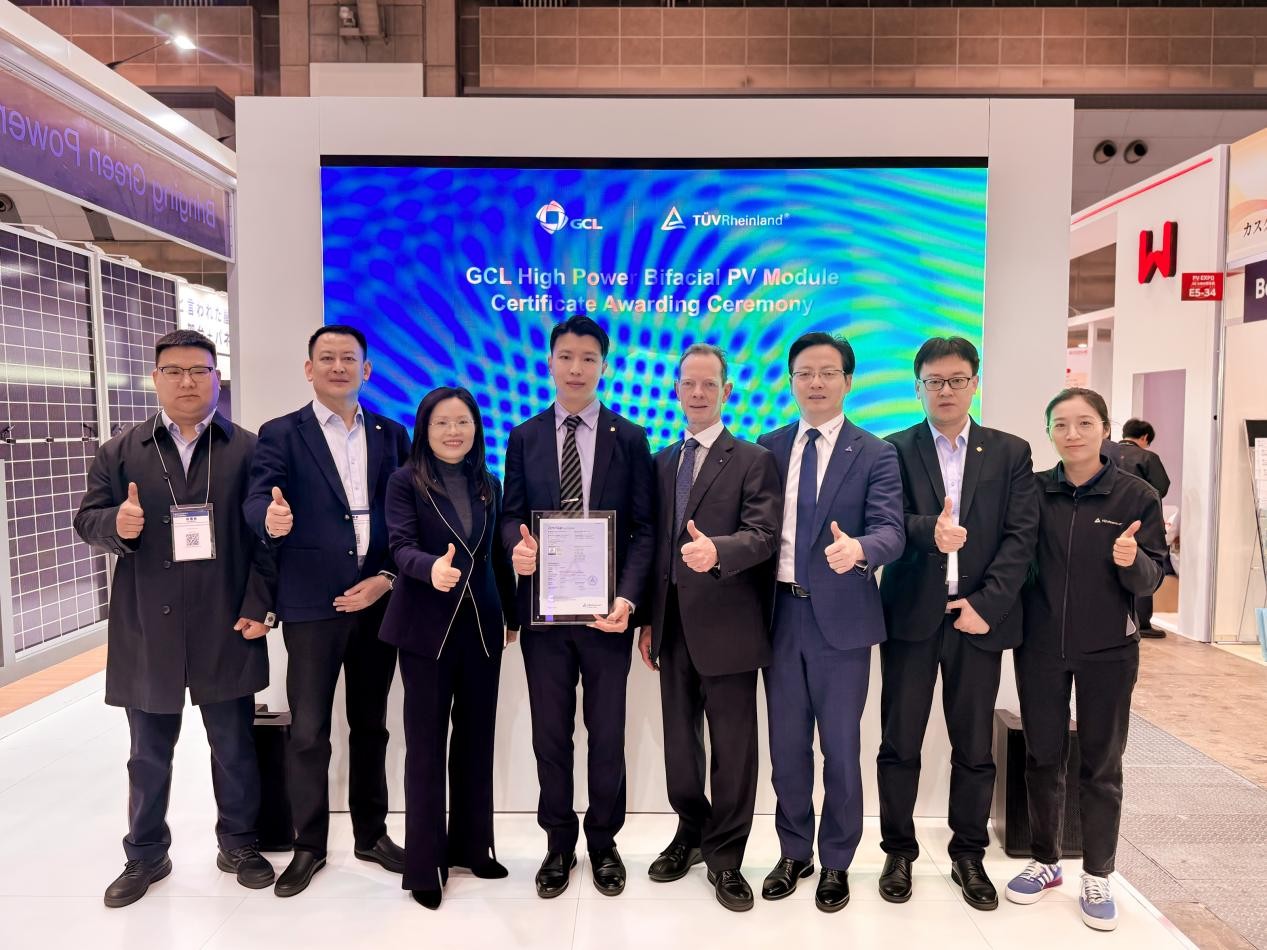
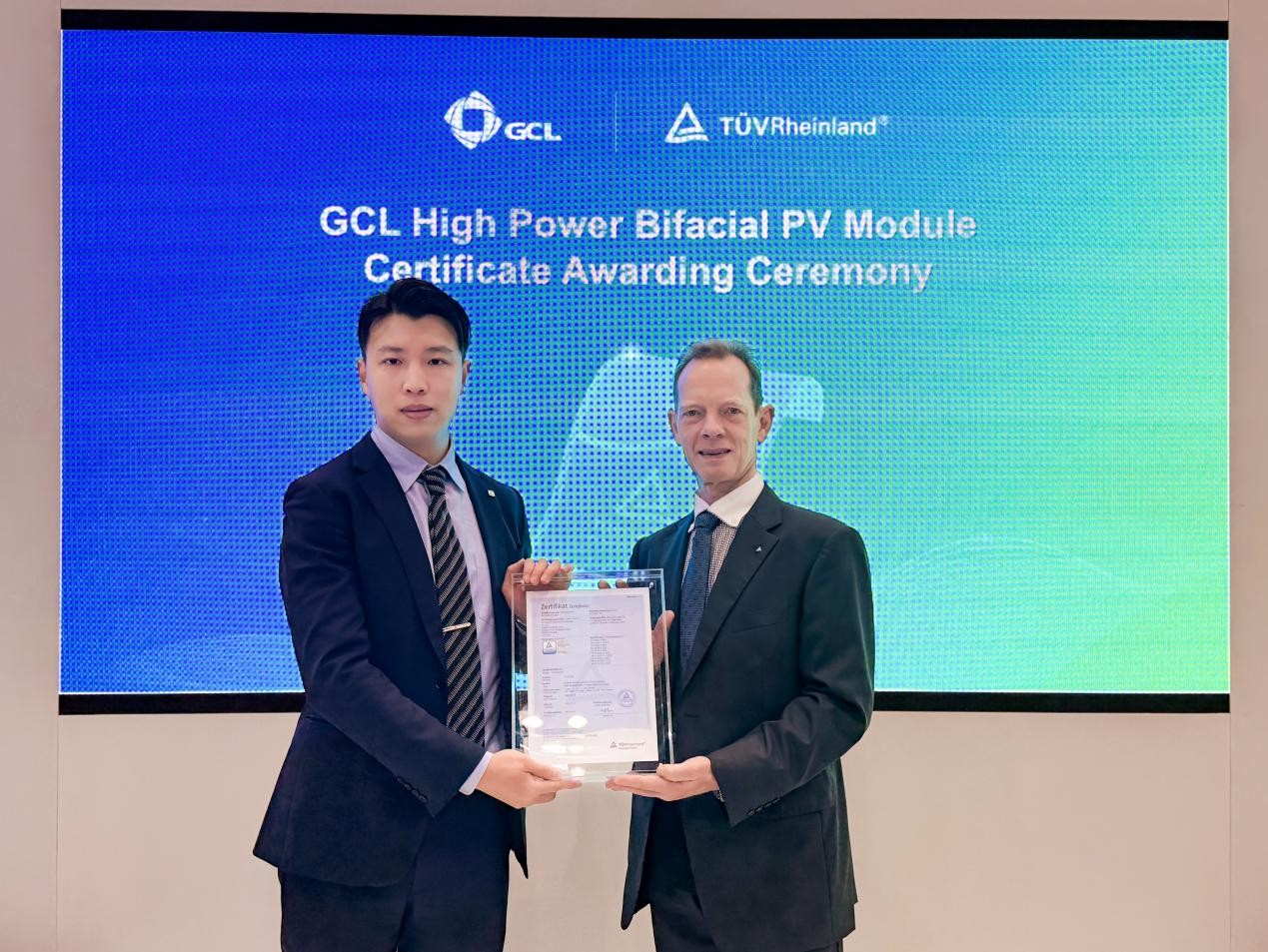
During the exhibition, TÜV Rheinland presented GCL with a BC double-glass module power extension certificate for its GPC back-contact (BC) module series, confirming compliance with IEC standards and recognizing the product’s high reliability and high-power performance. The certification highlights the continuous improvements in module output and conversion efficiency enabled by GCL’s BC technology roadmap.
By combining back-contact cell architecture with its proprietary double-glass encapsulation design, the modules demonstrate enhanced resistance to damp heat conditions, hot-spot risks, and long-term performance degradation. These features make the product particularly suitable for Japan’s PV market, where frequent typhoons, high humidity, and distributed rooftop installations require high levels of system stability and reliable lifecycle energy yield.
Showcasing next-generation PV module technologies
At the exhibition, GCL showcased several products from its SiRo series. These included the SiRo T series NT12R-66GDF and NT12/66GDF TOPCon modules, the SiRo B series NR12R-66GDF BC module. Both are designed for residential, commercial, industrial, and distributed generation applications that need high performance and long-term reliability.
The modules presented at the exhibition showcase how GCL’s different road-map technologies demonstrate the company’s latest development in high-efficiency module architectures:
SiRo T series: The SiRo T series TOPCon modules on display included the NT12R-66GDF, delivering up to 650 W with approximately 24.06% efficiency, and the NT12/66GDF, offering up to 730 W with around 23.5% efficiency. Based on n-type TOPCon cell technology, the modules are designed to reduce recombination losses and improve energy conversion performance, while delivering stable power output, low annual degradation, and strong lifetime energy yield.
SiRo B series: The NR12R-66GDF BC module adopts a back-contact cell architecture and delivers a power output of around 660 W. By relocating the electrical contacts to the rear of the cell, the design increases the active light-absorbing area, enabling higher conversion efficiency while supporting reliable long-term performance for distributed generation applications.
SiRo P series: Perovskite tandem modules featured large-format tandem designs measuring approximately 2400mm × 1150mm, demonstrating the company’s progress toward gigawatt-scale manufacturable perovskite technologies. GCL achieved 29.51% conversion efficiency on a 2048 cm² area and 27.06% on a 1.71 m² area, highlighting its ability to scale perovskite tandem technology from large-area cells to commercial-size modules while maintaining high efficiency. The technology also shows potential to reduce carbon footprint and manufacturing costs compared with conventional crystalline silicon technologies.
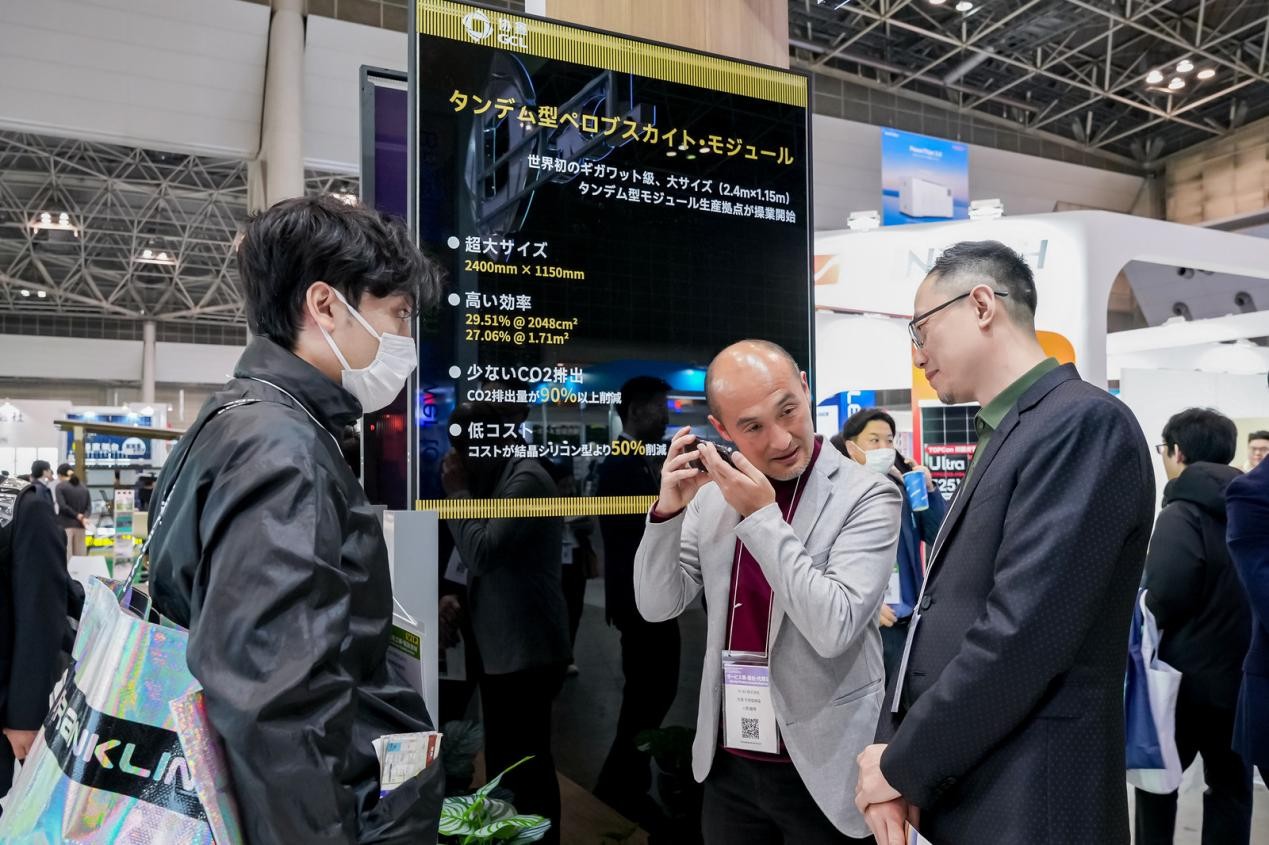
These developments reflect GCL’s continued investment in next-generation photovoltaic solutions for space-constrained and high-performance markets, such as Japan, where maximizing installation value and long-term energy output remain key priorities.
Japan remains a mature and quality-driven solar market
Japan remains one of the most technically demanding solar markets. It is supported by strict product certification systems, advanced installation standards, and a strong emphasis on long-term system reliability.
BloombergNEF forecasts Japan’s cumulative installed solar capacity to grow from about 96 GW in 2025 to more than 118 GW by 2030. Distributed solar is expected to remain a key contributor to future growth.
In this market, demand is shifting to high-efficiency products. These deliver stable performance and improved lifecycle returns, especially in commercial and distributed solar segments.
Supporting global growth through technology development and certification
Japan remains an important market for GCL due to its strong emphasis on product quality, technical performance, and long-term system reliability. The company continues to advance both BC and TOPCon technologies while expanding international certification to support customer requirements in high-standard solar markets.
Through continued investment in product development and global certification programs, GCL is focused on delivering reliable, high-performance modules for customers in Japan and other international markets.
The company said it will continue strengthening its global presence through technology advancement, product qualification, and localized market support, while expanding its footprint across both utility-scale and distributed solar segments.


.png)